
Elevator pitch coaching · Perth, Western Australia
Elevator pitch coaching helps you explain what you do, and why it matters, in under a minute, then scale it up for a boardroom pitch. David Julian Price coaches business owners, professionals and teams in Perth and online to build a pitch that’s part story, part logic and delivered with confidence. It’s part of David’s presentation skills coaching.
An elevator pitch used to be 40 seconds, the time a lift took to climb from the ground floor to the 15th. Today you can make a lasting impression in four. The game has changed, and most people haven’t noticed.
“The right pitch doesn’t just introduce you. It opens doors.”
What hasn’t changed
In a survey we ran with regular networking event attendees, only 20% of pitches were rated as memorable and effective. Four out of five people walk away leaving no impression at all.
Don’t be one of them.
From our networking survey
You’re already pitching
Elevator pitches were never really for elevators. You give them at networking events, in meetings, on the street and at a mate’s backyard BBQ. Someone asks “So, what do you do?” and suddenly you’re on.
Most people wing it. And almost everyone who wings it walks away thinking the same thing: I could have done that better. You could. With the right coaching, you will.
Six tips for a pitch that lands
Opportunity doesn’t make appointments. It ambushes you. Keep two or three versions of your pitch ready, like keys on a keyring. Reach for the right one when the door appears.
If you haven’t raised an eyebrow by the end of your opening line, you’ve probably lost them. A raised eyebrow means they want to know more.
It sounds obvious. It isn’t. The purpose of a pitch is to earn a follow-up conversation. The briefer and clearer you are, the more memorable you become.
Don’t tell people what you do. Tell them what changes for them when they work with you. Frame the shift, define the benefit, then ask for the action.
We remember what’s simple, surprising or rhythmic. A good metaphor or a touch of rhyme isn’t a gimmick. It’s memory architecture.
Your pace, pause, stance and eye contact all cast a vote on whether people believe you. Your body and your words need to tell the same story.
Every conversation is a potential introduction. Even if the person you’re talking to isn’t a fit, they might know someone who is.
Real pitches from people I’ve coached
“I’m the Invisible Man. I work on the stuff you’ll never see, but you need it for almost everything you do. I’m an electrical and communications specialist.”Barry · Comsec Electrical
“Who likes talking to Telstra or Optus? That’s what I do. I talk to them for my clients so they don’t have to.”Rob · Aria Telco Management
“If you’re hot and you want to be cool, call me.”Christian · Ford & Doonan Air Conditioning
The foundation of a memorable pitch
There’s a myth that a great pitch flows naturally if you know your business well enough. It doesn’t. Knowing your business and pitching it well are two completely different skills. The people who seem effortlessly natural have done the work.
Crafted on purpose, not made up on the spot.
So it comes out naturally when the moment arrives.
Easy to understand, with a benefit people can see.
Often far less. Sometimes four seconds is plenty.
How the workshop works
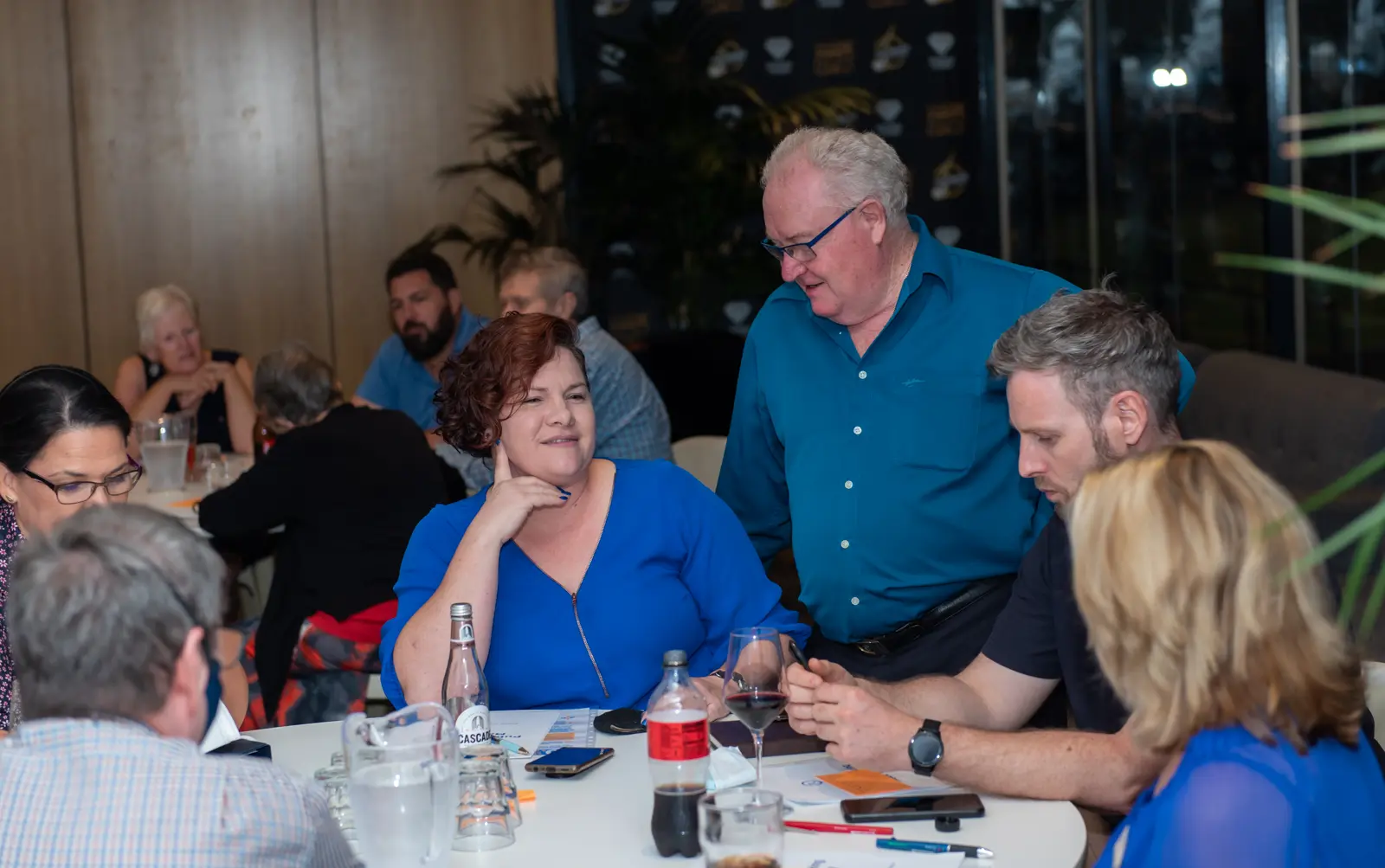
It’s totally interactive. Everyone gets hot-seat coaching on their own pitch, and everyone bounces off the energy and ideas of the room. Like a conductor with an orchestra, I set the tone and rhythm and manage the energy of the group. The result is some very creative pitches.
From elevator to boardroom
Curiosity, clarity, benefits and delivery don’t stop mattering when the pitch gets longer. They matter more. Once your four-second pitch lands, the next step might be a sales presentation, a tender or a board.
What clients say
“David managed to digest what we were telling him and turn it into a pitch, and actually remember it himself. He made everyone feel relaxed and worked with us individually to create something uniquely tailored to each of us.”Dave Edward · The Customer Experience Guy
“He worked out that my point of difference was that I always wore a purple top. I rebranded as The Purple VA. Since then people have said, ‘I can’t remember your name but I know you’re The Purple VA.’”Anne Brown · The Purple VA
Prefer to watch?
Short, practical videos on presenting with confidence. Free on YouTube.
Questions
Sixty seconds or less, and often much shorter. You can make a lasting impression in as little as four seconds. Keep two or three versions of different lengths for different situations.
To earn a follow-up conversation. It isn’t meant to tell your whole story. It’s meant to make someone curious enough to ask for more.
Create curiosity in the first few seconds, describe what you do simply, lead with the benefit and use something that sticks, such as a metaphor, a surprising turn of phrase or a bit of rhythm.
Benefits. People care about what changes for them, not the details of your process. Tell them the result, then invite the next step.
Most people do, and most walk away wishing they’d done better. Knowing your business and pitching it well are different skills. A great pitch is developed, designed, learned and rehearsed.
Yes. Formats range from a lunch and learn or staff meeting session to half-day, full-day and multi-day workshops, plus small group or one-to-one coaching, in person or virtual.
David is a Certified Speaking Professional (CSP), a Global Speaking Fellow and Past World President of the Global Speakers Federation, and a member of the Australian Speakers Hall of Fame. He brings 40+ years of real-world experience, plenty of humour and practical ideas people can use straight away.
Ready to build a pitch worth remembering?
Tell me about you, your business and where you pitch, and we’ll find the words that open doors.