
Persuasion and influence training · Perth, Western Australia
Persuasion and influence training teaches the ethical skills that help people see what you see and act on it. It’s for leaders, managers and professionals who need buy-in without formal authority. David Julian Price runs it in Perth and online, covering credibility, connection, framing, story and how to handle resistance.
Persuasion isn’t a personality trait reserved for the naturally charismatic. It’s a skill. It’s learnable. And it’s grounded in decades of tested science.
“Some people are natural. Most people aren’t. Both can learn.”
When do you need these skills?
Some people stumble into persuasion intuitively. Good for them. The rest of us need to learn it deliberately. You need it whenever you want people to:
Approve it. Fund it. Sign it. Do it.
So the facts land, and stick.
Not just nod along, then go back to what they’ve always done.
Ever walked out of a presentation thinking “I didn’t land that the way I wanted to”? This is for you.
What you’ll learn
The psychology behind influence and persuasion. Why people say yes, and what gets in the way.
How to design and structure a presentation that builds, step by step, to a compelling conclusion.
The nonverbal skills that make or break your message, often before you’ve said a word.
Here’s the part that surprises most people: many of the skills you’ll develop are ones you already have. You just didn’t know you had them, or how to use them well.
The part most people underestimate
When you need to persuade and influence, your nonverbal communication is often more powerful than anything you actually say. So we take a deep dive into it.
It’s often the difference between walking away with a yes and walking away wondering what went wrong.
The frameworks behind it
The Trust Triangle
Credibility earns attention. Connection earns goodwill. Congruity, when your words, voice and body all say the same thing, earns belief.
The Three V’s
What you say, how you sound and what people see. When all three line up, you’re persuasive. When they don’t, the audience believes the body, not the words.
How it works
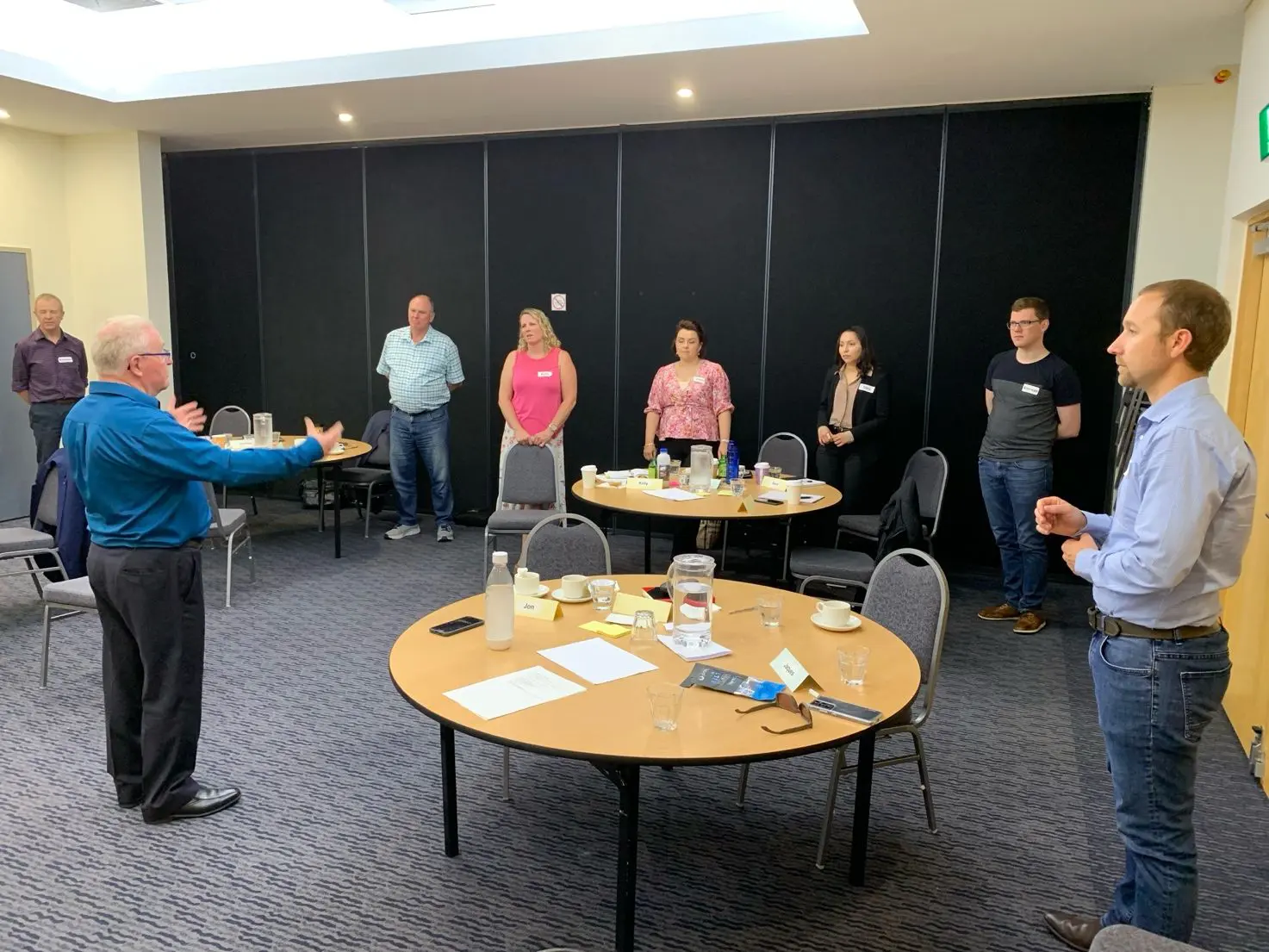
No taking notes while someone reads from slides. You’re doing, practising and applying from the very start.
The science, explained simply, with real examples.
On your feet, with practical coaching and feedback.
At your very next presentation, meeting or community engagement.
Who it’s for
The Walk Tall promise
The science of persuasion is fascinating when it’s presented the right way. I’ve been presenting it that way for decades, to audiences across Australia and internationally. You’ll leave with a toolkit you can use straight away, and you’ll wonder why nobody showed you this earlier.
About David
David Julian Price has spent 40+ years helping leaders, teams and volunteers speak with confidence and move people to action. He’s one of Australia’s most credentialled speaking coaches, and he focuses heavily on the nonverbal, because that’s where the real power of persuasion lives.
Prefer to watch?
Short, practical videos on business storytelling. Free on YouTube.
Questions
Yes. They’re skills, not personality traits. Some people pick them up intuitively, but most people learn them deliberately, and the science behind them has been studied and tested for decades.
No. Manipulation works against people’s interests. Ethical persuasion helps people understand, believe and act on something that genuinely matters. It’s built on trust: credibility, connection and congruity.
Because when your words and your body send different messages, people believe the body. How you stand, move, look, gesture and sound can decide whether you walk away with a yes.
Anyone who needs people to act, believe or think differently: managers introducing change, leaders seeking a board’s approval, fundraisers, community volunteers and people standing for local government or other elected roles.
It’s fully participative. You learn the science, then practise it on your feet with coaching and feedback, so you can apply it at your very next presentation or meeting.
Yes. Many people come to me before a board presentation, a funding pitch, a community meeting or an election campaign. We work on the actual case you need to make.
Yes. I’m based in Perth and work with individuals, teams and organisations across Western Australia, Australia and internationally, in person and online.
David is a Certified Speaking Professional (CSP), a Global Speaking Fellow and Past World President of the Global Speakers Federation, and a member of the Australian Speakers Hall of Fame. He brings 40+ years of real-world experience, plenty of humour and practical ideas people can use straight away.
Stop winging it
Let’s talk about the room you need to move, and the skills that will get you there.