
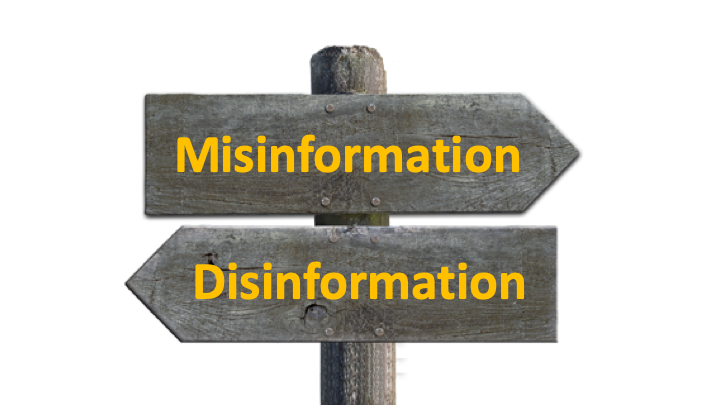


Could the difference between misinformation and disinformation be the most important distinction you learn to make in a meeting room?
They look alike. They sound alike. And in a meeting room where real decisions are being made, treating them as the same thing can cause serious damage.
Misinformation and disinformation. Two words that have entered common usage with the rise of social media — but they describe very different problems, and the distinction matters enormously for anyone who chairs meetings, serves on committees, or participates in formal group decision-making.
Misinformation: Wrong, But Not Dishonest
Misinformation is inaccurate information shared in good faith. The person believes what they’re saying. They may be significantly wrong — they may have misread a report, misheard a statistic, or simply never had the right information to begin with — but they are not trying to deceive anyone.
In a meeting context, misinformation often looks like this: a committee member confidently quotes a figure that turns out to be incorrect. A board member describes a policy position that has since been updated. A team leader reports on a competitor’s activity based on information that was accurate six months ago and isn’t now.
The speaker isn’t lying. They just have bad information. The right response is clarification and correction — and importantly, no blame attached to the person, because their intent was honest.
Disinformation: A Deliberate Tactic
Disinformation is a different animal entirely. It’s inaccurate information shared with the deliberate intention to mislead. The person knows what they’re saying is false — or heavily distorted — and they’re saying it anyway, with a purpose.
In meetings, disinformation can wear many disguises. It might be a “curved ball” — a statistic selectively chosen to derail a discussion. A “smokescreen” — information introduced to obscure something the person would prefer the group not examine. A “hidden agenda” — where stated reasoning conceals actual motivation.
Disinformation in a meeting setting is often the tool of what I’d call toxic participants: people who are skilled at appearing reasonable while systematically manipulating the group’s direction. They tend to be clever and careful. They leave few obvious fingerprints.
Why the Distinction Matters in Practice
If you treat disinformation like misinformation, you extend goodwill to someone who is actively abusing it. You keep correcting the record while they keep poisoning it, and you end up in an exhausting loop.
If you treat misinformation like disinformation, you create hostility and defensiveness in someone who was simply trying to contribute and got something wrong. That’s corrosive to the psychological safety that makes meetings productive.
The chair’s job — and really the job of every participant — is to develop the discernment to tell the difference, and to respond appropriately to each.
Reading the Room for Disinformation
So how do you spot it? A few indicators I’ve learned to watch for:
Consistent patterns. Misinformation tends to be episodic — people get things wrong occasionally. Disinformation tends to be directional — it consistently points in the same direction, usually toward the person’s preferred outcome.
Resistance to correction. Someone who genuinely got something wrong will typically accept correction gracefully. Someone operating with disinformation will often find a way to reintroduce the false premise in a different form.
Strategic timing. Disinformation is frequently deployed at high-stakes moments — just before a vote, in the middle of a sensitive discussion, when the chair’s attention is elsewhere.
What a Good Chair Does
When misinformation appears, correct it calmly, attribute it charitably, and move on. “Thanks — I think the actual figure is X, which we can verify — let’s proceed on that basis.”
When disinformation is suspected, document it. Note the specific claim. Return to it later. If a pattern emerges, address it directly and privately first — and then formally if necessary.
In both cases, the chair’s composure is the group’s anchor. A calm, factual response to false information — regardless of its origin — keeps the meeting on course and sets the standard for everyone else in the room.