

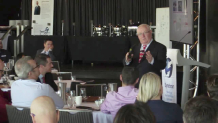

How to be a Charismatic Chairperson - it's more than running effective meetings.
Every day, in workplaces across the globe, tens of thousands of people chair meetings. It is arguably the most universal leadership activity there is. Yet here is the striking reality — almost none of them have had a single minute of training in how to do it well.
Most people learned to chair meetings the same way they learned bad habits at the dinner table: by watching others do it and copying what they saw. Some picked up good techniques. Many did not. And a few unwittingly developed habits that actively work against them, against the people in the room, and against the meeting itself. It’s more than running effective meeting. A lot more.
There is a higher standard worth aiming for. Not just competent chairing. Charismatic chairing.
Why Charisma Matters in the Chair
Charisma is elusive. Most people privately wish they had more of it. Most can name someone who has it. Very few can define it — and fewer still know how to develop it.
A charismatic chairperson has a rare and remarkable power: to get things done, to draw out the collective wisdom of a room full of people, and to make synergy something real and tangible rather than a buzzword on a whiteboard.
Ask the people in any organisation what they think of the chairing skills on display in their meetings. The answer is almost always the same: poor. Leaders receive training in speaking, time management, financial literacy — but chairing meetings? That, apparently, people are supposed to learn by osmosis.
The result is a world full of meetings that underwhelm, frustrate, and waste the time of everyone in the room.
The Three F’s: Fairness, Firmness and Focus
If you could distil the essence of a charismatic chairperson into three words, they would be these: Fairness. Firmness. Focus.
In thousands of conversations with meeting participants, the single most commonly cited missing ingredient is focus — followed very closely by firmness. A lack of fairness is rarer, thankfully, but when it exists, the meetings are disastrous — even if the person in the chair doesn’t realise it.
Meetings are the arena where leaders are assessed, judged and remembered. Whether that judgement is fair or accurate is beside the point — it happens. The chairperson who commands the room with fairness, firmness and focus is the one people respect, follow, and talk about long after the meeting ends.
Meetings Are a Game — Play to Win
Think of every meeting as a game. Not a trivial one — a serious one, like chess or a grand final. Every game has two requirements: rules and strategy.
The player who knows only the rules but lacks strategy will rarely win. The player who understands both — and who can read the strategies of others around the table — wins far more often than not.
Most meetings, though, have no written rules at all. No guidelines. No agreed process. Without them, the result is at best ineffectiveness and at worst outright anarchy. Before you can chair with charisma, you need a foundation everyone stands on together.
Action Step One: Establish Your Meeting Guidelines
Draw up a set of meeting guidelines — agreed to by the group, not imposed by you alone. A chairperson-imposed rulebook carries a fraction of the weight of one the group has shaped together. Here is a sample framework to get you started:
- A written agenda will be issued to all participants at least 24 hours before any meeting
- Every report presenter will provide a maximum one-page written summary for the minutes
- Verbal, unprepared reports without a written summary will not be accepted
- Minutes will record decisions and required actions only — not discussion or individual comments
- Decisions will be made by consensus, defined as a minimum of 80% agreement, with the remainder able to live with the outcome
- If consensus cannot be reached, a majority of 80% is required for a decision to carry
- Every person will be treated equally
- No item not on the agenda will be discussed
- All agenda items must be submitted by the agreed cut-off time
- Late or urgent items will only be considered if 80% of participants agree to include them
Charismatic leaders are consistent. They don’t change the rules mid-game. They welcome documented guidelines because they provide a calm, objective reference point when things go off track — and things always go off track eventually.
Action Step Two: Take an Honest Look at Your Skills
Every leader brings something to the table — experience, knowledge, confidence, wisdom. The great ones also know exactly where their game needs work. Like a professional athlete who spends more time drilling weaknesses than polishing strengths, the charismatic chairperson actively seeks out the gaps and fills them.
Most leaders never do this. They avoid asking for feedback for fear of what they might hear — or because they worry it signals weakness. In fact, the reverse is true. The leader who asks for honest feedback, and then acts on it, earns a level of respect and loyalty that other leaders can only watch from a distance.
Ask yourself — or better still, ask your colleagues — these questions:
- Is my chairing style more autocratic or democratic?
- Do I genuinely seem interested in what others think?
- Do I speak more than I listen?
- Do people find the meetings I chair worthwhile?
- If one improvement would make me a better chair, what would it be?
- Do I give the impression I’ve already decided before the meeting starts?
- If attendance were voluntary, would people still come?
The feedback you least want to hear is the feedback you most need to act on. Self-justification is the enemy of self-improvement.
Know Your Leadership Style: Service or Power?
This section requires absolute personal honesty. There are two dominant leadership styles in the chair — service leadership and power leadership — and they produce dramatically different outcomes.
Here is how they compare:
The Service Chairperson asks, listens, uses “we,” seeks the best outcome for the group, shares credit, builds morale, earns deep respect, and generates committed action after the meeting — because people want to deliver.
The Power Chairperson tells, talks, uses “I,” seeks outcomes that suit themselves, hoards credit, drains morale, demands respect (and therefore rarely receives it), and generates surface agreement in the meeting — followed by minimal action afterward, done only because people feel they must.
The great irony is that service leaders don’t seek power — yet they accumulate it. Power leaders chase it relentlessly — and ultimately lose it.
One more surprise: power people can have charisma. History has given us plenty of compelling, charismatic leaders whom people followed — out of fear. But fear-based charisma doesn’t last. When the leader leaves, people revert. Little changes. The legacy is hollow.
True charismatic leadership — the kind that creates lasting change — is built on respect freely given, not reluctantly surrendered.
Action Step Three: Talk Less. Listen More.
Here is a counterintuitive truth that the data consistently supports: the more a chairperson speaks, the less effective they are.
Read that again.
The charismatic chair sets the scene, frames the questions, and then gets out of the way. They ask things like: “How would that work in practice?” and “What do others think?” They resist the urge to fill every silence with their own voice.
This is not weakness. It is strategy. By listening more, the service chairperson develops a far deeper understanding of how their people think — and becomes vastly more skilled at harnessing the collective intelligence in the room. Paradoxically, that listening earns them exactly what they weren’t seeking: real influence.
Monitor yourself. If you are commenting after every contribution from the group, you are chairing poorly. The best chairs speak the least and achieve the most.
Action Step Four: Give Your Opinion Last
What if you’re the most knowledgeable person in the room? What if you already know the answer? Then give your opinion last — not first.
Set the scene. Provide the background. Then ask focused questions and let the room speak. Wait. Listen. You will almost always find someone in the group who shares your view and will voice it — leaving you free to remain visibly impartial while the group moves toward the right conclusion organically.
When you give your opinion first, you shut the conversation down. Human nature being what it is, most people will default to agreement — even if they have reservations. The ideas that could have improved the decision never surface. You’ve just made the meeting less effective by being too helpful, too early.
Research into meeting vocabulary reveals a consistent pattern. When a new issue arises, the first words from a power chair are: “I think we should…” The first words from a service chair are: “What do you think?”
Four words. Worlds apart in their impact.
Putting It All Together: Your Charismatic Chair Checklist
Charisma in the chair is not a magic gift bestowed on the few. It is a set of behaviours that can be developed, practised, and refined — by anyone willing to do the work.
Start here:
Shift the focus. The meeting is not about you. It’s about the people in the room and the outcomes they need to achieve together. The moment you internalise that, everything changes.
Look for the wisdom in the room. Consciously seek the knowledge, experience and insight of your participants. Ask questions that draw people out. You will find what you are looking for.
Be firm and consistent. People follow leaders who are predictable in the best sense of the word. No surprises. No moving goalposts. Clear decisions made decisively once the facts are gathered.
Focus on outcomes and action. Every meeting should end with absolute clarity on who does what, by when. Document it. Distribute it immediately. Follow up without fail.
Develop your own style. Don’t chair meetings the way your boss does, or the way the last person in the role did. Stamp your own mark on how you lead. Charisma is never a copy — it is always an original.
Do these things consistently, and the results will speak for themselves. More than that — the people in your meetings will speak for you.
David Julian Price is one of Australia’s foremost authorities on meetings and chairing, an inductee into the Australian Speakers Hall of Fame, and a Certified Speaking Professional. He works with organisations across Australia and internationally to lift the quality of their meetings and the leaders who run them. Visit davidprice.com to learn more.