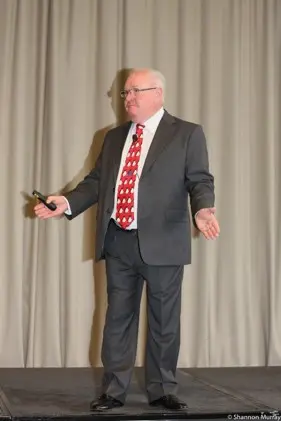
Public speaking – questions from an engineer.
In this conversation, Simon Pritchard puts his questions about public speaking to David Julian Price, a Perth presentation skills coach with 40+ years’ experience. If […]

In this conversation, Simon Pritchard puts his questions about public speaking to David Julian Price, a Perth presentation skills coach with 40+ years’ experience. If […]
Make This the Year You Become a Confident and Persuasive Speaker There is a version of you that commands a room. That lands a message […]

What is your organisation’s dress code really saying – and does it matter in today’s world? It started with a simple workplace disagreement: one team […]

Why do so many leaders reach the top without learning the skills of an effective speaker or presenter? It’s one of the genuine mysteries of […]

How many times should you practise your presentation when the stakes are high? Everyone knows you should practise before you present. But when the stakes […]

Design and delivery are both crucial components in making a presentations powerful and effective

The brain doesn’t think in words. It thinks in pictures. And pictures are created in our brains by metaphors. There are metaphors everywhere. We just need to notice them.

I’m waiting on a parcel today. I’m genuinely looking forward to what’s inside. But here’s the thing — if the delivery fails, if it ends up at the wrong address, arrives damaged, or simply doesn’t show up at all, it doesn’t matter what’s in it. The contents become irrelevant, because I never received them.
That’s the relationship between content and delivery in a presentation.

Here’s something I’ve learned after decades on the speaking circuit: speaking opportunities don’t wait for you to feel ready. They knock, and they knock quickly.
The ability to communicate clearly and confidently isn’t a professional advantage. It’s a professional necessity. And yet the single most common thing I hear from people who’ve missed opportunities — who turned down the invitation to present, who said no to the speaking request, who declined the chance to lead the room — is some version of “I didn’t feel ready yet.”

Virtual presentation tips can really make you look good. But if you don’t pay attention to the technicalities, it can make you look bad.
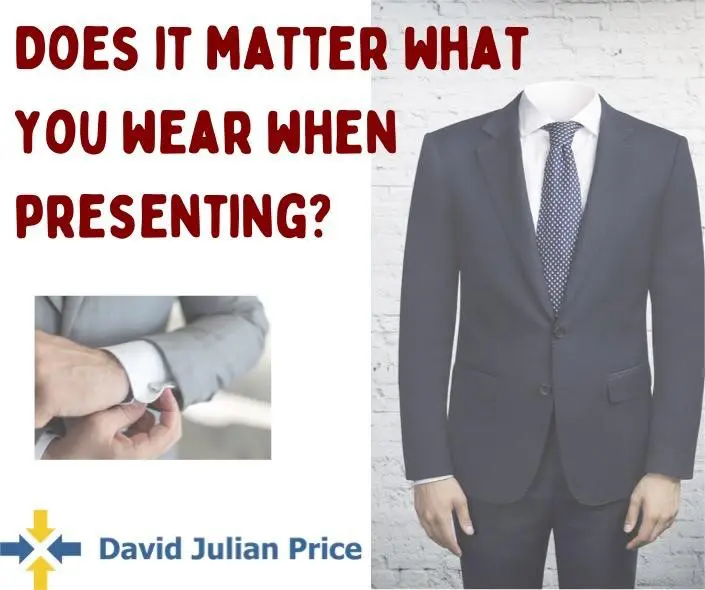
There’s a principle I come back to regularly in my work with speakers: the audience forms its first impression of you before you utter a single word. The moment you walk into the room – or in a virtual setting, the moment your image appears on screen – you are communicating. So make “what should you wear ” a conscious decision.
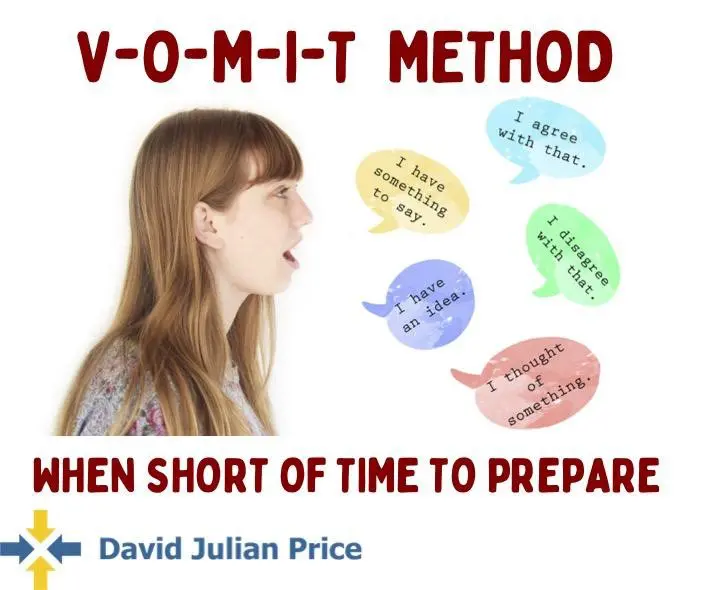
VOMIT stands for Verbal Outpouring of Material In Total. The name describes the process precisely: you don’t think, you don’t edit, you don’t filter — you simply pour everything you know about your topic into a voice recording or a document, as fast as it comes, without stopping to judge any of it.

Do the people in your networking groups know what pigeon hole you fit in? Are you sure? Quick — think of someone you’d recommend for […]

What can the world’s most famous gift-giver teach you about crafting an elevator pitch that gets you remembered in 60 seconds? Ho ho ho gets […]
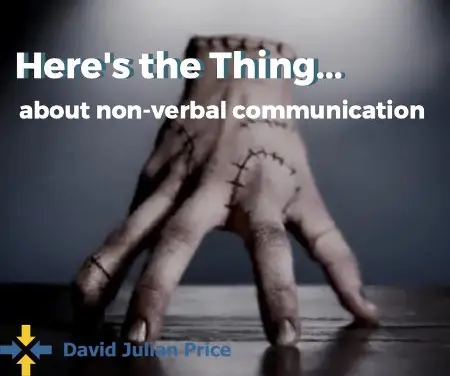
Thing is a disembodied hand. No face, no voice, no body language in any conventional sense — just a hand, moving through the world of the show. And yet Thing is one of the most expressive, emotionally compelling characters in the series. Without a face, without a voice, Thing communicates — clearly, specifically, and memorably — through movement, gesture, and timing alone.
Which makes Thing one of the most instructive teachers of non-verbal communication I’ve come across in recent pop culture.