Point of Order

Does your meeting really understand Points of Order — or is everyone just hoping no one raises one?

A point of order is a tool, which is used to draw attention to a breach in rules, an irregularity in procedure, the irrelevance or continued repetition of a speaker or the breaching of established practices or contradiction of a previous decision.

What happens when a procedural motion is moved “That the matter lie on the table”?

“To lie on the table” is a formal procedural motion. 

The purpose of the motion is to defer further consideration of the matter currently before the meeting, without setting a specific time for when it will be revisited.

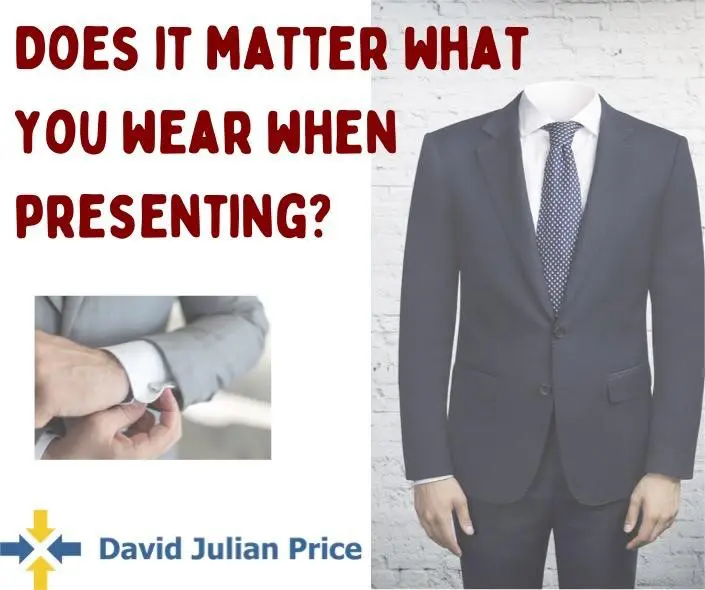
What should you wear when you’re the one standing on the stage, — and why does your choice matter more than you might think?

There’s a principle I come back to regularly in my work with speakers: the audience forms its first impression of you before you utter a single word. The moment you walk into the room – or in a virtual setting, the moment your image appears on screen – you are communicating. So make “what should you wear ” a conscious decision.

What is it really costing your organisation to keep the people who have stopped contributing – the deadwood – and when is it time to bite the bullet?

Every organisation has them. Deadwood. The people who were once genuine assets but have quietly become liabilities. The committee member who turned up reliably for years and now attends erratically and contributes little. The staff member whose performance was once the benchmark and is now a daily management challenge. The board director who built their reputation in a different era and hasn’t kept pace with where the organisation needs to go.

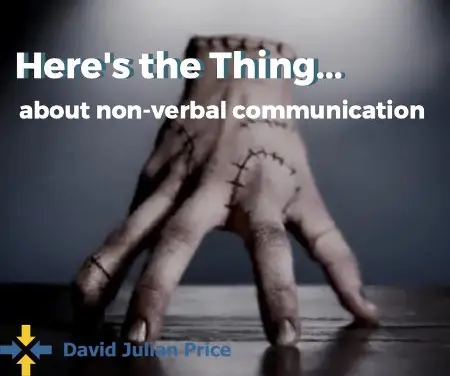
What can a disembodied hand from a Netflix show teach you about non-verbal communication that no textbook ever could?

Thing is a disembodied hand. No face, no voice, no body language in any conventional sense — just a hand, moving through the world of the show. And yet Thing is one of the most expressive, emotionally compelling characters in the series. Without a face, without a voice, Thing communicates — clearly, specifically, and memorably — through movement, gesture, and timing alone.
Which makes Thing one of the most instructive teachers of non-verbal communication I’ve come across in recent pop culture.

Not Another Meeting!

Not Another Meeting! Smarter Meetings Start Here: Six Keys That Actually Work Virtually everyone in the working world attends meetings. Staff meetings, management meetings, planning […]

Is sitting in back-to-back meetings actually part of your job — or does everyone just assume it is?

A senior executive sat across from me recently – impressive career, multiple board roles, significant responsibility – and made a remark I haven’t stopped thinking about.
“Some people,” she said quietly, “justify their salary by having meetings.”
It was said without malice. She wasn’t ranting. She was making an observation she’d reached after years of watching organisational behaviour from the inside. And the more I’ve thought about it, the more I believe she’s identified something genuinely important. Meetings are sometimes just part of the job.